Home Blog Page 66

Wingstop.com Survey – Your Guide to Free Wings and More

0

Chicken wing aficionados, flock this way! We all know Wingstop delivers flavor explosions in every bite, but what about the experience behind those crispy wings? Have you ever wanted to share your thoughts on their juicy wings, speedy service, or fiery dips? Well, cluck no more! The Wingstop.com Survey is your chance to sing (or squawk) your praises or offers constructive chirps to help Wingstop soar even higher in the wing kingdom. So, grab your receipt (it’s your golden ticket to survey entry), and get ready to unleash your inner wing critic – Wingstop is listening!
Wingstop.com Survey

But wait, there’s more than just the satisfaction of sharing your voice. Completing the survey could land you some sweet rewards, like discounts on future wing feasts or exclusive Wingstop merch. So, what are you waiting for? Dive into the Wingstop.com Survey and let your wing wisdom fly!

About Wingstop customer satisfaction survey

The Wingstop customer satisfaction survey is a way for the restaurant chain to gather feedback from their customers about their experience. By completing the survey, you can share your thoughts on the food, service, cleanliness, and overall value of your visit to Wingstop.

Here’s what you need to know about the Wingstop customer satisfaction survey:

  • Purpose: Wingstop uses the survey to understand what their customers like and dislike about their experience. This feedback is then used to improve the restaurant’s operations, menu, and customer service.
  • Access: You can access the survey in a few ways:
  • Online: You can find the survey link on Wingstop’s website or on your receipt.
  • Mobile app: If you ordered through the Wingstop mobile app, you can access the survey directly within the app.
  • In-store: Some Wingstop locations have physical survey cards available near the exit.
  • Content: The survey typically asks questions about various aspects of your experience, such as:
  • Food: The taste, quality, and variety of the wings and sides.
  • Service: The friendliness, efficiency, and helpfulness of the staff.
  • Cleanliness: The cleanliness of the restaurant and restrooms.
  • Value: Whether you feel you got good value for your money.
  • Open-ended questions: These allow you to provide additional feedback or suggestions you might have.
  • Rewards: Some surveys may offer an incentive for completing them, such as a discount on your next order.

Overall, the Wingstop customer satisfaction survey is a valuable tool for both customers and the restaurant. It allows you to share your feedback and help Wingstop improve its operations.

How to take Wingstop survey

Taking the Wingstop customer satisfaction survey is easy! Here are three ways to access it:

Online

  1. This is the most common and convenient method. You can find the survey link printed on your receipt or directly on the Wingstop website at http://mywingstopsurvey.com/usa.
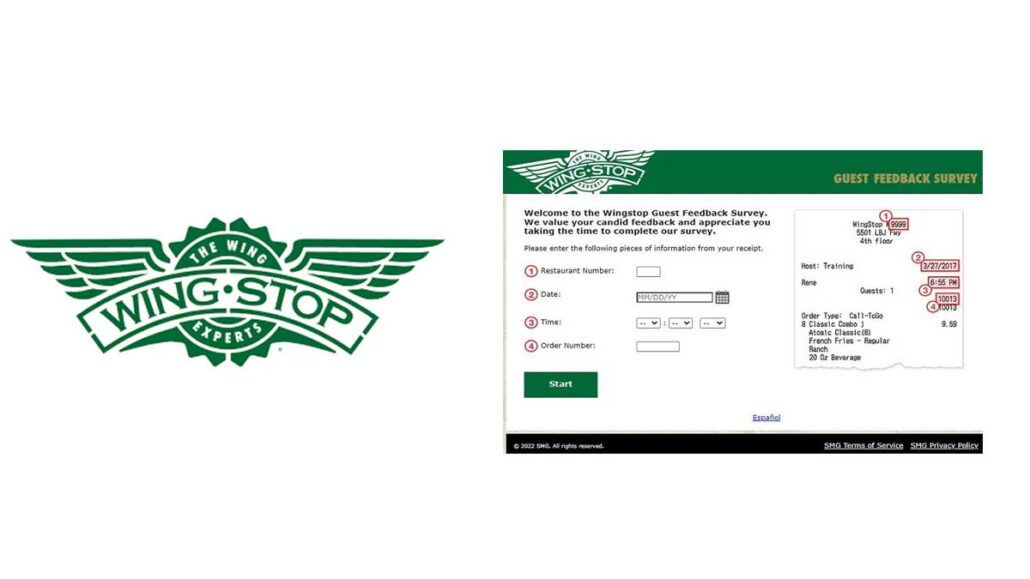
  2. Upon clicking the link, you’ll be directed to a welcome page explaining the purpose of the survey and data collection practices.
  3. Enter the required information from your receipt, such as the transaction number or date of visit.
  4. Answer the survey questions honestly and in detail. These typically cover your experience with food, service, cleanliness, and overall value.
  5. Submit the survey once complete.

Mobile App:

  • If you ordered through the Wingstop mobile app, you can access the survey directly within the app.
  • Look for a “Survey” or “Feedback” section within the app’s menu or settings.
  • Clicking on it will take you to a similar survey experience as the online version.

In-Store:

  • Some Wingstop locations might have physical survey cards available near the exit.
  • These cards typically have a link or QR code printed on them that directs you to the online survey.
  • Alternatively, the card might have space for you to write down your feedback directly.

Rewards and benefits of completing Wingstop.com survey

Completing the Wingstop.com survey may come with various rewards and benefits, though it’s not always guaranteed. Here’s what you can potentially expect:

  • Satisfaction: Sharing your honest feedback can be personally satisfying, knowing you’re helping Wingstop improve their customer experience.
  • Chance to win prizes: Some surveys may offer a chance to win prizes like gift cards, discounts, or even free food through sweepstakes or giveaways. The specific details and chances of winning will be mentioned in the survey itself.
  • Improved service: Over time, your feedback, along with others, can lead to better service, cleaner restaurants, and a more enjoyable Wingstop experience for everyone.
  • Personalized offers: By providing your email address in the survey, you may receive exclusive deals and promotions tailored to your preferences, like birthday discounts or special menu offers.
  • Influence future developments: If you mention specific menu items you loved or disliked, it could contribute to Wingstop adding new flavors or removing unpopular ones in the future.

Your valuable feedback helps Wingstop understand its customers better, which can lead to better business decisions and potential restaurant expansion, ultimately creating more job opportunities.

Tips for providing valuable feedback in the Wingstop survey

  • You’ll need your receipt or order number to start the survey.
  • The survey typically takes only a few minutes to complete.
  • Be honest and specific with your feedback to help Wingstop improve.
  • Some surveys may offer rewards for completion, like a discount on your next order.

FAQs

What to expect after taking the Wingstop survey?

After completing the Wingstop survey, you can expect a few different things depending on the specific survey you took and any potential rewards offered

How long does it take to complete the survey?

Generally, you can expect the Wingstop survey to take between 5 and 10 minutes on average. However, it could be as quick as 3 minutes for a very short survey or as long as 15 minutes for a more comprehensive one.

What information will I be asked to provide?

The specific information you’ll be asked to provide in the Wingstop survey can vary depending on the type of survey and the restaurant location

How often can I take the survey?

You can take the Wingstop customer satisfaction survey as often as you visit a Wingstop restaurant location, but there are limitations on how often you can receive rewards or sweepstakes entries

What are the chances of winning free wings?

it’s quite challenging to determine the exact chances of winning free wings on Wingstop.com because the specific details and probabilities vary depending on several factors


Credit Card Debt Consolidation Loan – Get Out of Debt Fast and Easily

0

Are you drowning in credit card debt? Discover how a Credit Card Debt Consolidation Loan can help you regain control of your finances and pave the way to a debt-free future.

Credit Card Debt Consolidation Loan

Credit cards have become an essential part of our financial lives. They offer convenience and flexibility, allowing us to make purchases and manage expenses effortlessly. However, it’s all too easy to fall into the trap of accumulating high-interest credit card debt, which can quickly spiral out of control. If you find yourself in this situation, a Credit Card Debt Consolidation Loan might be the lifeline you need to regain your financial footing.

What is a Credit Card Debt Consolidation Loan?

A Credit Card Debt Consolidation Loan is a financial tool that enables individuals to consolidate multiple credit card balances into a single loan with a lower interest rate. This loan can be obtained from a bank, credit union, or online lender. The primary goal is to simplify your debt repayment process, reduce interest costs, and ultimately become debt-free sooner.

The pros and cons of credit card debt consolidation loans

Debt consolidation is a process of taking out a new loan to pay off multiple debts. This can be a good option if you have high-interest credit card debt and are struggling to make your monthly payments.

Here are some of the pros and cons of credit card debt consolidation loans:

Pros:

  • Lower interest rates: If you can get a lower interest rate on a debt consolidation loan than you’re currently paying on your credit cards, you could save money on interest in the long run.
  • Lower monthly payments: A debt consolidation loan may have a lower monthly payment than your current credit card payments. This can make it easier to budget and stay on top of your debt.
  • One monthly payment: With a debt consolidation loan, you’ll only have to make one monthly payment. This can simplify your finances and make it easier to track your spending.
  • Improve your credit score: If you make all of your debt consolidation loan payments on time, it can help improve your credit score.

Cons:

  • Closing your credit cards: If you close your credit cards after consolidating your debt, you’ll lose the available credit and your credit utilization ratio may increase. This could hurt your credit score.
  • Fees: There may be fees associated with a debt consolidation loan, such as an origination fee or closing costs.
  • Risk of default: If you default on your debt consolidation loan, you could damage your credit score and have difficulty getting approved for future loans.

Overall, debt consolidation can be a good option if you’re struggling to manage your credit card debt. However, it’s important to weigh the pros and cons carefully before you take out a loan.

Here are some things to consider when deciding whether or not to consolidate your debt:

  • Your current interest rates: How high are your current credit card interest rates? If you can get a lower interest rate on a debt consolidation loan, it may be worth it to consolidate your debt.
  • Your monthly budget: Can you afford the monthly payments on a debt consolidation loan? Make sure to factor in all of the associated fees when calculating your monthly payments.
  • Your credit score: If you have a poor credit score, you may not be approved for a debt consolidation loan with a low interest rate.
  • Your debt-to-income ratio: Your debt-to-income ratio is the percentage of your monthly income that goes towards debt payments. A high debt-to-income ratio can make it difficult to get approved for a loan.

How to choose the best credit card debt consolidation loan

Here are some factors to consider when choosing the best credit card debt consolidation loan:

  • Interest rate: The interest rate is the most important factor to consider when choosing a debt consolidation loan. A lower interest rate will save you money in the long run.
  • Fees: Some lenders charge origination fees, late payment fees, and other fees. Be sure to compare the total cost of the loan, including the interest rate and fees, before you choose a lender.
  • Loan amount: The loan amount should be enough to cover your credit card debt, but not so much that you will struggle to make the monthly payments.
  • Repayment term: The repayment term is the length of time you will have to repay the loan. A shorter repayment term will mean higher monthly payments, but you will pay less interest overall.
  • APR: The APR, or annual percentage rate, is the total cost of the loan expressed as a yearly percentage. It includes the interest rate and other fees.
  • Credit score requirements: Some lenders have minimum credit score requirements for debt consolidation loans. If your credit score is low, you may have to pay a higher interest rate or have a shorter repayment term.
  • Other features: Some lenders offer features like flexible repayment options or no origination fees. Consider these features when choosing a lender.

Steps to choose the best credit card debt consolidation loan:

  • Get pre-approved for a loan: This will give you an idea of how much you can borrow and what the interest rate will be.
  • Compare offers from multiple lenders: Get quotes from at least three lenders before you choose one.
  • Read the terms and conditions carefully: Make sure you understand the interest rate, fees, and repayment terms before you sign the loan agreement.
  • Make sure you can afford the monthly payments: The monthly payments should not be more than 10% of your monthly income.

If you are considering a credit card debt consolidation loan, be sure to do your research and compare offers from multiple lenders. By following these tips, you can choose the best loan for your needs and get out of debt faster.

Here are some additional tips for choosing a credit card debt consolidation loan:

Get quotes from online lenders as well as traditional banks. Online lenders often have lower interest rates and fees.

If you have poor credit, look for a lender that specializes in bad credit loans.

Consider a secured debt consolidation loan if you have a low credit score. A secured loan requires you to put up collateral, such as a car or home, to secure the loan. This can help you get a lower interest rate.

Be sure to read the terms and conditions carefully before you sign any loan documents.

Consolidating your credit card debt can be a good way to save money on interest and get out of debt faster. However, it is important to do your research and choose the right loan for your needs.

Types of credit card debt consolidation loans

Here are four main types of credit card debt consolidation loans:

  • Personal loans: Personal loans are unsecured loans that can be used for any purpose, including debt consolidation. They typically have lower interest rates than credit cards, but they may also have origination fees.
  • Home equity loans: Home equity loans are secured loans that are backed by your home equity. This means that if you default on the loan, the lender can foreclose on your home. Home equity loans typically have lower interest rates than personal loans, but they may also have stricter credit score requirements.
  • Balance transfer credit cards: Balance transfer credit cards offer 0% interest for a promotional period, typically 12 to 18 months. This can be a good way to save money on interest if you can pay off your debt within the promotional period. However, be sure to read the terms and conditions carefully, as there may be balance transfer fees or other charges.
  • Debt consolidation credit cards: Debt consolidation credit cards are designed specifically for debt consolidation. They typically offer lower interest rates than regular credit cards, and they may also have features like 0% interest for a promotional period or no annual fee.

The best type of debt consolidation loan for you will depend on your individual circumstances. Consider your credit score, debt amount, and repayment goals when making your decision.

The steps involved in consolidating credit card debt

Gather your debt information: This includes the balance, interest rate, and monthly payment for each credit card debt.

Get pre-approved for a debt consolidation loan: This will give you an idea of how much you can borrow and what the interest rate will be.

Compare offers from multiple lenders: Get quotes from at least three lenders before you choose one.

Read the terms and conditions carefully: Make sure you understand the interest rate, fees, and repayment terms before you sign the loan agreement.

Use the loan to pay off your credit card debt: Once you have been approved for a loan, you can use the money to pay off your credit card debt.

Make your monthly payments on time: It is important to make your monthly payments on time to avoid late fees and defaulting on the loan.

Track your progress: Keep track of your progress so you can see how you are doing and stay motivated.

Here are some additional tips for consolidating credit card debt:

  • Get quotes from online lenders as well as traditional banks. Online lenders often have lower interest rates and fees.
  • If you have poor credit, look for a lender that specializes in bad credit loans.
  • Consider a secured debt consolidation loan if you have a low credit score. A secured loan requires you to put up collateral, such as a car or home, to secure the loan. This can help you get a lower interest rate.
  • Be sure to read the terms and conditions carefully before you sign any loan documents.

Consolidating your credit card debt can be a good way to save money on interest and get out of debt faster. However, it is important to do your research and choose the right loan for your needs.

Benefits of consolidating credit card debt

Here are many benefits to consolidating credit card debt. Here are some of the most common:

  • Lower interest rates: If you can get a lower interest rate on a debt consolidation loan than you are currently paying on your credit cards, this can save you money in the long run.
  • One monthly payment: Instead of making multiple payments to different credit card companies, you will only have to make one monthly payment to the lender. This can make it easier to budget and track your spending.
  • Reduced stress: Having a single monthly payment can help reduce stress and make it easier to stay on track with your debt repayment.
  • Improved credit score: Paying off your credit card debt can help improve your credit score. This can make it easier to get approved for loans in the future.
  • Easier to manage: Having a single loan with a fixed interest rate and monthly payment can make it easier to manage your debt.

Risks of consolidating credit card debt

Higher monthly payments

If you take out a debt consolidation loan with a higher interest rate than your current credit card rates, your monthly payments may be higher. This could make it difficult to afford the payments and could lead to default.

Risk of default

If you are unable to make your monthly payments, you could default on the loan. This could damage your credit score and make it more difficult to get approved for loans in the future.

Hidden fees

Be sure to read the terms and conditions carefully before you sign any loan documents. There may be hidden fees that could increase the overall cost of the loan.

Not addressing the underlying issues

Consolidating your debt may not address the underlying issues that led to you accumulating debt in the first place. If you do not change your spending habits, you may end up in debt again in the future.

Losing available credit

If you consolidate your debt with a secured loan, you may have to put up collateral, such as your car or home. If you default on the loan, you could lose this collateral.

Also, if you are considering consolidating your credit card debt, it is important to weigh the risks and benefits carefully. If you are not sure whether or not it is the right decision for you, talk to a financial advisor. They can help you assess your financial situation and make the best decision for you.

Here are some tips to help you avoid the risks of consolidating credit card debt:

Get pre-approved for a loan before you start shopping around. This will give you an idea of how much you can borrow and what the interest rate will be.

  • Compare offers from multiple lenders before you choose one.
  • Read the terms and conditions carefully before you sign any loan documents.
  • Make sure you can afford the monthly payments.
  • Create a budget and stick to it.
  • Pay more than the minimum monthly payment whenever possible.
  • Get help from a financial advisor if you need it.

Best Motorbike Insurance in USA

0

For passionate riders, navigating the open road is an exhilarating dance between freedom and responsibility. While the wind whips through your hair and the engine hums beneath you, knowing you’re protected by the right motorbike insurance is paramount. But with a dizzying array of options in the vast American market, finding the “best” can feel like chasing a mirage. Fear not, fellow adventurer! This guide will be your compass on the best motorbike insurance in USA, helping you navigate the complexities of motorbike insurance and discover the perfect policy to match your unique needs and budget.

Best Motorbike Insurance in USA

Whether you’re a seasoned veteran cruising on a Harley or a fresh-faced thrill-seeker on a sleek sportbike, understanding your coverage options is crucial. We’ll delve into the essential elements of a motorbike insurance policy, from liability and collision protection to comprehensive coverage and specialized add-ons.

We’ll also explore the factors that influence your premium, like your riding experience, location, and the type of motorbike you own. By equipping you with knowledge and insights, we’ll empower you to make informed decisions and confidently choose the motorbike insurance that grants you the peace of mind to truly enjoy the open road. Buckle up, get ready to shift gears, and let’s find the perfect policy to fuel your next adventure!

Top 10 best motorbike insurance in USA

Determining the absolute “top 10” best motorbike insurance companies in the USA depends heavily on individual needs and priorities. However, I can offer you a comprehensive list of highly-rated options along with their strengths to help you find the best fit for you:

Progressive

Known for their wide range of coverage options, competitive rates, and accident forgiveness programs. They also offer replacement cost coverage as standard and have a good reputation for customer service.

Foremost

This company excels in catering to experienced riders and those who participate in track days or racing. They offer specialized coverage options like track-day insurance and vanishing deductible programs.

Harley-Davidson

As you might expect, Harley-Davidson insurance is tailored for Harley riders. They offer excellent discounts for Harley owners and riders with safety certifications, along with roadside assistance and customization coverage.

American Family

This company stands out for its low complaint ratio and focus on customer satisfaction. They offer competitive rates and a variety of coverage options, including agreed-value coverage for classic or custom bikes.

Erie Insurance

Erie shines in collision repair services. They have a network of repair shops and guarantee repairs using genuine OEM parts. This can be particularly valuable for older or classic motorcycles.

Allstate

Allstate boasts a long list of discounts for things like bundling your motorcycle insurance with your car insurance, having good safety records, and completing motorcycle safety courses. They also offer equipment coverage and first accident waivers.

Nationwide

Nationwide is a great option for motorcycle collectors. They offer agreed-value coverage and roadside assistance specifically for classic bikes. Additionally, they have a good reputation for customer service.

Markel

If you’re looking for comprehensive coverage with unique options, Markel is worth considering. They offer mechanical breakdown coverage, which can be helpful for older bikes or those with high mileage.

Dairyland

Dairyland is known for its affordability. They offer competitive rates, particularly for low-risk riders. However, their coverage options may be more limited than some other insurers.

GEICO

GEICO is another budget-friendly option with a quick and easy online quote process. They offer a variety of coverage options and discounts, including multi-policy discounts if you bundle your motorcycle insurance with your car insurance.

How to find the best motorbike insurance in the USA

Know Your Needs:

  • Coverage: Determine your desired level of protection. Need comprehensive coverage for your prized chopper? Or simply basic liability for your weekend cruiser? Understanding your risk tolerance and riding habits is key.
  • Budget: Set a realistic budget. While cheap policies might be tempting, they may lack crucial coverage. Prioritize your needs and find the best value for your money.
  • Riding Profile: Consider factors like your experience level, annual mileage, and type of motorcycle. These influence your risk profile and premium costs.

Explore Your Options:

  • Compare Quotes: Don’t settle for the first offer! Obtain quotes from various reputable companies like Progressive, Geico, and Dairyland. Online comparison tools can streamline this process.
  • Read the Fine Print: Carefully review coverage details, deductibles, exclusions, and add-ons. Ensure you understand what’s covered and what isn’t.
  • Seek Recommendations: Ask fellow riders, motorcycle clubs, or online forums for trusted insurance providers. Their personal experiences can be valuable insights.

Factor in the Extras:

  • Discounts: Look for discounts offered for safety courses, multi-policy bundles, or good driving records. Every penny saved counts!
  • Customer Service: Prioritize companies with a reputation for responsive and helpful customer service. You want a reliable partner in case of an accident.
  • Additional Features: Consider optional coverage like roadside assistance, custom parts protection, or travel insurance for added peace of mind.

Remember, the “best” motorbike insurance is the one that perfectly balances your needs, budget, and risk profile. By following these steps and doing your research, you’ll be confidently cruising the open road, knowing you’re covered for any unexpected twists and turns.

Is cheap motorcycle insurance worth it?

The answer to whether cheap motorcycle insurance is worth it depends on several factors and ultimately boils down to your risk tolerance and financial situation. Here’s a breakdown of the pros and cons to help you decide:

Pros of Cheap Motorcycle Insurance:

  • Lower monthly premiums: This is the obvious advantage, especially for budget-conscious riders. Saving money on insurance frees up funds for other motorcycle-related expenses, upgrades, or gear.
  • Can meet minimum legal requirements: Most states have minimum liability coverage requirements for motorcycles. Cheap insurance can fulfill this legal obligation, ensuring you’re not riding uninsured.

Cons of Cheap Motorcycle Insurance:

  • Limited coverage: Cheap policies often offer bare minimum liability coverage, which may not cover all your needs. This means you could be on the hook for significant costs if you get in an accident and damage your bike, injure someone, or incur medical bills.
  • Higher deductibles: Cheap policies often have higher deductibles, which is the amount you pay out-of-pocket before the insurance company kicks in. This can leave you with a hefty financial burden after an accident.
  • Limited add-ons: Cheap policies usually lack optional add-ons like comprehensive coverage, roadside assistance, or custom parts protection. These can be crucial for peace of mind and financial security.
  • Potential for poor service: Some budget insurance companies might have a reputation for slow claim processing or unhelpful customer service. This can be a major headache when dealing with the aftermath of an accident.

Tips for saving money on motorcycle insurance

Saving money on motorcycle insurance is important, especially since it can be a significant expense. Here are some tips to help you get the best coverage for your needs without breaking the bank:

  • Shop around and compare quotes. Don’t just go with the first insurer you find. Get quotes from at least three different companies to compare rates and coverage options. You can use online comparison tools or contact insurance agents directly.
  • Consider your coverage needs carefully. Do you need comprehensive coverage, which covers damage to your bike regardless of fault, or just liability coverage, which covers damage you cause to others? The more coverage you have, the higher your premium will be, so it’s important to find the right balance for your needs and budget.
  • Take advantage of discounts. Many insurers offer discounts for things like completing a motorcycle safety course, having a good driving record, or bundling your motorcycle insurance with your car or home insurance. Ask your insurer about all the discounts they offer and see if you qualify for any of them.
  • Increase your deductible. Your deductible is the amount you have to pay out of pocket before your insurance kicks in. Increasing your deductible can lower your monthly premium. However, make sure you can afford to pay your deductible if you need to file a claim.
  • Store your motorcycle securely. Keeping your motorcycle in a garage or other secure location can lower your insurance premium. This is because motorcycles that are stored in secure locations are less likely to be stolen or damaged.
  • Ride safely. The safer you ride, the less likely you are to file a claim, which can help you keep your insurance rates low. Always obey the speed limit, wear a helmet, and avoid risky behavior like riding under the influence of alcohol or drugs.
  • Review your policy annually. Your insurance needs may change over time, so it’s important to review your policy annually to make sure you have the right coverage. You may be able to get a lower rate if you qualify for any new discounts or if your risk profile has improved.

By following these tips, you can save money on your motorcycle insurance without sacrificing coverage. Remember, the most important thing is to find an insurance policy that meets your needs and budget.

Common motorcycle insurance mistakes to avoid

Navigating the world of motorcycle insurance can be tricky, and even seasoned riders can fall victim to common mistakes. To help you avoid costly pitfalls and ensure you’re protected on the road, here are some of the most common motorcycle insurance mistakes to steer clear of:

Underestimating Your Coverage Needs:

  • Minimal Liability: While the bare minimum legal coverage might seem affordable, it leaves you exposed to significant financial risk if you cause an accident. Consider comprehensive coverage for your bike and higher liability limits for better protection.
  • Ignoring Optional Add-ons: Roadside assistance, custom parts coverage, and travel insurance might seem unnecessary, but they can be lifesavers in specific situations. Evaluate your needs and budget before dismissing these options.

Skipping the Research:

  • Falling for the Cheapest Policy: It’s tempting to prioritize low premiums but remember, cheap coverage often signifies limited protection. Compare quotes, read reviews, and understand the details before committing.
  • Not Comparing Different Companies: Don’t settle for the first offer. Utilize online comparison tools, reach out to independent agents, and research different providers to find the best value for your needs.

Neglecting Policy Details:

  • Misrepresenting Information: Be honest and accurate when applying for insurance. Dishonesty can void your policy if discovered later, leaving you unprotected.
  • Ignoring Policy Renewals: Let your policy lapse? Be prepared for higher premiums or denial of coverage when you try to renew. Set reminders or auto-payment options to avoid lapses.

Mismanagement and Oversights:

  • Forgetting Modifications: Adding custom parts or modifying your bike can affect your coverage. Inform your insurance company about any modifications to avoid policy complications.
  • Riding Uninsured: Never ride without insurance. It’s illegal in most states and leaves you financially exposed in case of an accident.

By being aware of these common mistakes and taking the time to understand your needs and research your options, you can ensure you’re riding with confidence and the right motorcycle insurance in place. Remember, the peace of mind of knowing you’re protected is invaluable on the open road.

Deakin Scholarships –  Studying in Australia

0

Dreaming of pursuing your academic aspirations at Deakin University, but worried about the financial burden? Fear not, scholarship seeker! This comprehensive guide is your roadmap to unlocking the treasure trove of Deakin scholarships and securing your dream education.

Deakin Scholarships

Deakin University, with its vibrant campuses across Australia, boasts a stellar reputation for academic excellence and industry-relevant programs. But beyond the world-class education, Deakin recognizes the financial constraints students face and offers a plethora of scholarships to support their academic journey.

Types of Deakin scholarships available

Deakin University offers a wide range of scholarships to support students at all levels of study, from undergraduate to postgraduate. These scholarships can provide financial assistance with tuition fees, living expenses, and other costs associated with studying at Deakin.

Here are some of the most popular Deakin scholarships:

Deakin-funded undergraduate scholarships

These scholarships are awarded to students with high academic achievement and a commitment to their chosen field of study. There are three main Deakin-funded undergraduate scholarships:

  • Vice-Chancellor’s Academic Excellence Scholarship: This scholarship is awarded to the top academic achievers in each faculty. It provides up to $20,000 per year for up to four years.
  • Deakin Scholarship for Excellence: This scholarship is awarded to students who have achieved excellent academic results and who demonstrate leadership potential. It provides up to $10,000 per year for up to four years.
  • Deakin Student Support Scholarship: This scholarship is awarded to students who experience financial hardship and who demonstrate passion, perseverance, and commitment to their studies. It provides up to $10,000 per year for up to four years.

Deakin International Scholarships

These scholarships are awarded to international students who are coming to Deakin to study for the first time. There are two main Deakin International Scholarships:

  • Deakin Vice-Chancellor’s International Scholarship: This scholarship is awarded to the top academic achievers among international students. It covers full tuition fees and provides a living allowance.
  • Deakin International Scholarship: This scholarship is awarded to international students who have achieved high academic results. It provides a 25% tuition fee reduction.

Faculty-specific scholarships

Many faculties at Deakin offer scholarships to students who are studying in their faculty. These scholarships can vary in value and eligibility criteria.

Other scholarships

There are several other scholarships available to Deakin students, including scholarships from external organizations and government agencies.

Benefits of Deakin Scholarship

The benefits of receiving a Deakin scholarship are numerous and can significantly impact your academic journey. Here are some of the key advantages:

Reduced financial burden:

Scholarships can help cover the cost of tuition fees, living expenses, and other study-related costs, alleviating the financial pressure of pursuing higher education. This can be especially beneficial for international students or those facing financial hardship.

Greater flexibility:

With financial support, you can focus more on your studies and extracurricular activities without worrying about juggling work and studies to make ends meet. This can lead to better academic performance and a more fulfilling university experience.

Validation of academic excellence:

Receiving a scholarship is a testament to your hard work and dedication to your studies. It recognizes your academic achievements and serves as a source of motivation to continue excelling.

Enhanced competitiveness:

Having a scholarship on your resume can make you a more competitive candidate for future jobs or postgraduate studies. It demonstrates your academic ability and potential, which can be attractive to employers and admissions committees.

Networking opportunities:

Some Deakin scholarships, like the Vice-Chancellor’s scholarships, come with participation in exclusive programs or events. These provide opportunities to network with academics, industry professionals, and other high-achieving students, fostering valuable connections for your future career.

Leadership and development skills:

Many scholarship programs involve leadership workshops, mentoring programs, or other initiatives designed to help scholars develop valuable skills and gain confidence. These experiences can enhance your personal and professional development, preparing you for success in your chosen field.

Overall, Deakin scholarships offer a range of benefits that can make a significant positive impact on your academic and personal life. They can provide financial support, academic recognition, and valuable opportunities for personal and professional development.

Deakin scholarship eligibility

Eligibility for Deakin scholarships varies depending on the specific scholarship you’re interested in. However, some general requirements apply to most Deakin scholarships:

Academic Merit:

  • Most scholarships require a strong academic record, typically demonstrated by high grades or academic achievements in relevant subjects.
  • Specific grade requirements vary, but some scholarships, like the Vice-Chancellor’s Academic Excellence Scholarship, require an ATAR of 95 or above.

Citizenship and Residency:

  • Some scholarships are only available to Australian citizens or permanent residents, while others are open to international students.
  • For example, the Deakin International Scholarship is specifically for international students coming to Deakin for the first time.

Course of Study:

  • Some scholarships are specific to certain faculties or courses of study at Deakin.
  • For example, the Faculty of Business and Law offers a range of scholarships for students studying in their faculty.

Other Eligibility Criteria:

  • Some scholarships may have additional eligibility criteria, such as financial hardship, community involvement, or leadership potential.

Here are some resources to help you find out more about Deakin scholarship eligibility:

  • Deakin University Scholarships website: This website provides a comprehensive list of scholarships offered by Deakin, along with eligibility criteria and application deadlines.
  • Deakin Scholarships Office: You can contact the Deakin Scholarships Office for more information about specific scholarships and eligibility requirements.

I recommend that you carefully review the eligibility criteria for each scholarship you’re interested in to ensure that you meet all the requirements. If you have any questions, don’t hesitate to contact the Deakin Scholarships Office for assistance.

How to apply for Deakin scholarships

Applying for Deakin scholarships involves several steps, and the specific process can vary depending on the scholarship you’re targeting. Here’s a general guide to help you navigate the application process:

1. Choose your scholarship:

  • Browse the Deakin University Scholarships website to explore the available options. Use the filtering tool to narrow down your search based on your level of study, scholarship type, and course of study.
  • Read the application details carefully for each scholarship you’re interested in, paying close attention to eligibility criteria, required documents, and submission deadlines.

2. Prepare your application documents:

Typically, most Deakin scholarships require the following documents:

  • Completed application form (accessible through the Scholarship application portal or individual scholarship page)
  • Academic transcripts
  • Curriculum Vitae (CV) or resume
  • Personal statement (300-500 words) addressing the scholarship’s specific criteria and highlighting your achievements, goals, and motivations.
  • Supporting documents relevant to the scholarship, such as reference letters, evidence of community involvement, or awards certificates.

3. Apply through the correct channel:

  • Check the application instructions for each scholarship. Some scholarships require submission through the Deakin Scholarship application portal, while others might necessitate direct email application or application through VTAC.
  • Ensure you meet the specified deadline for submission. Late applications are usually not considered.

4. Additional tips for a strong application:

  • Tailor your statement to each scholarship individually, demonstrating your understanding of the specific criteria and values.
  • Proofread your application carefully before submitting it. Ensure it’s free of grammatical errors and typos. If applicable, seek guidance from your teachers, career advisors, or the Deakin Scholarships Office for feedback on your application.

Deakin scholarship application deadlines

Deakin University scholarship application deadlines vary depending on the specific scholarship you’re interested in. However, there are three main scholarship application periods throughout the year:

  • Trimester 1: From late August until March. Scholarship opportunities will open and close at different times during this period.
  • Trimester 2: From mid-June to mid-July.
  • Trimester 3: From late October to mid-November.

Here are some additional resources to help you find out the specific deadlines for the scholarships you’re interested in:

  • Deakin University Scholarships website
  • Deakin Scholarship application portal

Tips for winning Deakin scholarships

Securing a Deakin scholarship can significantly ease the financial burden of your studies and recognize your academic achievements. While competition can be fierce, there are several steps you can take to boost your chances of standing out from the crowd. Here are some tips to help you win a Deakin scholarship:

1. Choose the right scholarship:

  • Research thoroughly: Deakin offers a wide range of scholarships, each with specific eligibility criteria and selection processes. Explore the Deakin University Scholarships website to find scholarships aligned with your academic field, level of study, and financial needs.
  • Consider your strengths and goals: Choose scholarships that match your academic achievements, extracurricular activities, and career aspirations. Highlighting relevant skills and experiences can strengthen your application.

2. Prepare a compelling application:

Meet all eligibility requirements: Carefully review the scholarship criteria and ensure you fulfill every condition. Missing even minor requirements can disqualify you.

  • Craft a strong personal statement: This is your opportunity to showcase your unique qualities, motivations, and goals. Tailor your statement to each scholarship, highlighting how you meet the selection criteria and how the scholarship will support your aspirations.
  • Gather supporting documents: Prepare academic transcripts, CV/resume, reference letters, and any other required documents well in advance. Ensure they are organized, error-free, and presented professionally.

3. Demonstrate academic excellence:

  • Maintain strong grades: High academic performance is crucial for most Deakin scholarships. Aim for consistently good results in relevant subjects.
  • Seek academic awards and recognition: Participation in academic competitions, research projects, or achieving dean’s list honors can strengthen your application.

4. Highlight extracurricular involvement:

  • Showcase leadership skills: Getting involved in student clubs, volunteering, or holding leadership positions demonstrates initiative, teamwork, and communication abilities.
  • Demonstrate community engagement: Participating in community service projects or initiatives showcases your commitment to social responsibility and making a positive impact.

5. Present a polished application:

  • Proofread meticulously: Ensure your application is free of grammatical errors, typos, and formatting inconsistencies. A polished presentation reflects your attention to detail and professionalism.
  • Submit on time: Meet all application deadlines promptly. Late submissions are usually not considered.

HDFC Home Loan – Apply for Housing Loan Online

0

Is HDFC Bank good for collecting home loan? Or perhaps how can I apply for HDFC home loans? HDFC is known as Housing Development Finance Corporation Limited which is a financial service company in India. However, the HDFC financial service is very popular based on its major provision of finance for housing in India. Acquiring a home loan from HDFC is considered to be a good option based on the HBFC interest rate or offers to members of the platform. However, based on the research about the financial service, the HDFC home loan is provided at a rate of as low as 8.00%.

HDFC Home Loan - HDFC Home Loan Interest Rate | Apply for Housing Loan Online

Furthermore, HDFC offers members of the platform financial services that include home loans that come with EMIs which start from Rs.734 per lac and also with an interest rate of 8.00%. Moreover, HDFC provides people with housing loans in other to purchase their dream choice home and also create their own space home through HDFC home loans.

Key Features of Acquiring Home Loans

On the contrary, the term acquiring HDFC housing loan is actually tailored by HDFC home loan eligibility criteria. This includes salary earners who can find loans and view the attractive HDFC interest rates and also a longer tenure. Also, the platform provides you with investment solutions to help you make the right choice of home. Some of the home loan key features:

  1. Home loans on HDFC allow you to purchase loans for a flat, row house, or even bungalow that is under development by private developers.
  2. Also, it allows you to acquire loans for properties from organizations like DDA, MHADA, and more.
  3. It enables you to consult expert legal and technical counseling in making the right choice at home.
  4. Those employed in the Indian Army have access to special arrangements that come with AGIF in acquiring loans from HDFC Home Loans.

Moreover, these are some of the key features of acquiring or applying for the HDFC home loan insurance plan. Hence, you can check out some of the interest rates of the platform below.

HDFC Home Loans Interest Rate for 2020

In the meantime, one of the factors that attract members to the platform or that considers HDFC Bank good for home loans is the rate of interest HDFC provides to members. However, you can check out the retail prime lending rate which is about 16.60%.

  1. For Women (up to 30 Lakhs) comes with a home loan interest rate ranging from 8.00 to 8.50% p.a.
  2. For others (up to 30 Lakhs) allow offers home loan interest rates ranging from 8.00 to 8.50% p.a.
  3. Also, for women (30.01 Lakhs to 75 Lakhs) comes with 8.25 to 8.75 home loan interest rates
  4. Others (30.01 Lakhs to 75 Lakhs) offer 8.25 to 8.75 home loan interest rates.
  5. For women (75.01 Lakhs & Above) is 8.30 to 8.80 HDFC home loan interest rates.
  6. Lastly others (75.01 Lakhs & Above) also comes with 8.30 to 8.80 HDFC home loan interest rates.

In addition, the HDFC home loan interest rate/EMI is accessible for loans under the Adjustable Rate Home Loan Scheme of HDFC. Also, the list of home loan interest rates is actually variable in nature and subject.

What is the Eligibility Required for HDFC Home Loans?

On the contrary, before moving or thinking of acquiring a housing loan from HDFC, you need to, first of all, read the HDFC home loan eligibility criteria. This helps you to understand the HDFC home loan application status tracking.

HFDC housing loan minimum requirement for primary applicants:

  1. Age: 21-65 years.
  2. Profession: salaried/self-employed.
  3. Nationality: Resident of India
  4. Gender: all gender.

HFDC housing loan minimum requirement for co-applicants:

  1. Adding co-applicants helps in increasing the loan amount.
  2. Also, when you add women co-owner gives you better interest rates.
  3. Lastly, all co-applicants don’t have to be a co-owner and your co-applicant can be your close family members.

Keep in mind, that you can need to provide some certain HDFC home loan eligibility documents and charges that included Home Loan documents for salaried Individuals, Home Loan Charges and Fees, and also Home Loan Repayment options for salaried individuals.

Guideline to HDFC Home Loans Apply Online

First of all, in calculating your interest rate, the platform makes use of the HDFC Home Loan EMI Calculator in other to help you estimate the amount or calculate the charges or fee you need to pay for your home loan with ease.

In summary, to access the application online page, you can visit the link www.hdfc.com/housing-loans/home-loans and click Apply Now. Then you can check out the HDFC home loan eligibility documents and also based on salary. Keep in mind, that before applying for the HDFC housing load, you need to have an HDFC account. therefore, you can simply sign in for an account or log in to your account if you have already created an account.

Auto Refinance – Get Lower Payments Today

0

Does your car payment feel like a drag on your finances? Are you burdened by a high-interest rate or a loan term that no longer fits your needs? If so, auto refinance might be the key to unlocking a smoother financial ride. In essence, it’s like trading in your old car loan for a shiny, new one with better terms. This guide will navigate you through the world of auto refinance, explaining how it works, the potential benefits, and the key factors to consider before taking the plunge. Whether you’re aiming to lower your monthly payment, shorten your loan term, or simply snag a lower interest rate, buckle up and get ready to learn how to make your car loan work for you, not the other way around.

Auto Refinance

Next, we’ll delve deeper into the mechanics of auto refinance, exploring the steps involved, the different lenders and loan options available, and the potential savings you could reap. We’ll also address some common concerns and considerations, equipping you with the knowledge to make an informed decision and refinance your way to financial freedom.

What is Anto refinance

Imagine your car loan as a heavy anchor weighing you down, with monthly payments draining your resources like fuel into a gas-guzzling engine. That’s where auto refinance comes in, acting like a high-performance upgrade that can transform your financial vehicle.

So, what exactly is auto refinance? In simple terms, it’s the process of replacing your existing car loan with a new one, ideally with better terms and conditions. Think of it like trading in your old clunker for a more fuel-efficient model – you’re ditching the outdated loan with its high-interest rate and potentially extending your repayment period, for a sleeker, more financially friendly option.

Here’s how it works:

  • You shop around for a new loan: Compare rates and terms from different lenders to find the best deal. A good credit score can open doors to even more competitive offers.
  • Get approved for the new loan: The new lender will pay off your existing loan, and you’ll start making payments on the new one.
  • Enjoy the benefits: Depending on the terms you secure, you could:
  • Reduce your monthly payments: Lowering your interest rate can significantly shrink your monthly obligations, freeing up cash for other priorities.
  • Shorten your loan term: Pay off your debt faster and save on overall interest paid.
  • Consolidate debt: If you have other high-interest loans, you can roll them into the new car loan, simplifying your finances.

Auto refinance isn’t a magic bullet, and it’s important to weigh the pros and cons carefully before making a decision. But for many car owners, it can be a powerful tool to take control of their finances and reach their financial goals faster. So, if you’re feeling bogged down by your car loan, consider kicking the tires on auto refinance – it might just be the boost your financial engine needs!

Benefits of Auto Refinance

Refinancing your car loan can be like taking a scenic detour on your financial highway, leading you to lower interest rates, smaller monthly payments, and a sunnier financial outlook. Buckle up as we explore the perks of auto refinance:

Slash Those Rates, Slash Those Payments:

The biggest draw of refinancing is the chance to snag a lower interest rate, especially if rates have dropped since you took out your original loan. This translates to significantly smaller monthly payments, freeing up cash for other priorities or letting you pay off your loan faster. Think of it as trading in your gas-guzzling debt for a fuel-efficient savings machine!

Shorten the Finish Line:

If you’re eager to ditch your car loan and reclaim financial freedom, refinancing can help you shorten your loan term. This means fewer months of making payments, and you’ll own your car outright sooner. It’s like hitting the fast-forward button on your debt-free journey!

Cash Back in Your Pocket:

Some refinance options allow you to cash out your car’s equity, essentially borrowing against its value. This can be a handy way to consolidate high-interest debt, make necessary home repairs, or even splurge on a well-deserved vacation. Just remember, borrowing more means more to pay back, so use this option wisely!

Boost Your Credit Score:

Making consistent, on-time payments on your refinanced loan can improve your credit score. This can unlock better rates on future loans, credit cards, and even insurance. It’s like paying your future self a bonus!

Ditch the Lender Blues:

Not happy with your current lender’s service or terms? Refinancing gives you the chance to switch to a lender who better suits your needs. Look for lenders with competitive rates, flexible repayment options, and excellent customer service. It’s your car loan, choose a partner who makes the ride smooth!

Eligibility and Requirements

You need to know if you’re eligible to join the smooth-riding crew. Buckle up, as we explore the key requirements for landing a stellar refinance deal:

  • Credit Score: This plays a starring role. Aim for a score above 670 to unlock the best rates. If your score is lower, consider building it before starting your refinancing journey.
  • Loan Age and Length: Most lenders prefer vehicles under 10 years old with at least 6 months of payments made and at least 6 months remaining. Shorter loan terms generally offer better rates.
  • Debt-to-Income Ratio: This measures your monthly debt payments against your income. Ideally, stay below 50% to demonstrate your ability to handle new repayments.
  • Vehicle Value and Equity: Your car’s value compared to your remaining loan balance needs to be healthy. More equity generally opens doors to better rates.
  • Clean Payment History: Late payments can act as roadblocks. A consistently clean payment history is a green light for lenders.
  • Documentation: Proof of income, residence, insurance, and car registration are typically required to verify your information.

Comparing Rates and Lenders

This guide will equip you with the tools to compare rates and lenders like a seasoned pro, ensuring you land the smoothest ride possible.

Step 1: Know Your Credit Score

  • Your credit score is the key that unlocks the door to the best rates. Check your score from all three major credit bureaus (Experian, Equifax, and TransUnion) – you’re entitled to one free report per year from each. A higher score translates to lower interest rates, so consider working on improving your credit before diving into refinance.

Step 2: Shop Around, Don’t Settle

  • Don’t get stuck at the first gas station you see! Compare rates from a variety of lenders, including banks, credit unions, and online lenders. Online aggregators like LendingTree and NerdWallet can be helpful starting points, allowing you to compare multiple offers side-by-side. Remember, the lowest headline rate isn’t always the best deal – factor in origination fees, closing costs, and other potential charges.

Step 3: Consider the Extras

  • Some lenders offer additional perks beyond just low rates, such as cash-back bonuses or flexible repayment terms. Weigh these against the overall interest rate to find the package that best suits your needs. For instance, a slightly higher rate with a cash-back bonus might be worth it if you need some immediate financial relief.

Step 4: Read the Fine Print

  • Before you sign on the dotted line, scrutinize the loan agreement carefully. Pay close attention to any prepayment penalties, hidden fees, and terms that might restrict your flexibility down the road. Remember, knowledge is power – the more you understand the terms, the more confident you’ll be in your decision.

Step 5: Don’t Be Afraid to Negotiate

  • Once you have a few competitive offers in hand, don’t be afraid to play the lenders against each other. Let them know you’re considering other options and see if they’re willing to sweeten the deal. A little friendly competition can often lead to even better savings.

Auto Refinance Process

1. Gear Up: Assessing Your Situation

Before hitting the gas pedal, take a moment to assess your situation. Ask yourself:

  • Is refinancing right for me? Consider your current interest rate, credit score, and car’s value. Generally, refinancing makes sense if you have good credit, a high-interest loan, and significant time left on your loan term.
  • How much can I save? Use online calculators to estimate potential savings based on your loan details and desired terms.

2. Pre-Qualify and Polish Your Ride

  • With the green light, it’s time to pre-qualify for new loans. This involves submitting basic information to lenders without impacting your credit score. Once pre-qualified, compare offers from different lenders, focusing on interest rates, loan terms, and any fees. Remember, the lowest rate isn’t always the best deal; consider the total cost of the loan.

3. Gather Your Documents

Now, gather your paperwork like:

  • Driver’s license and proof of insurance
  • Proof of income (pay stubs, tax returns)
  • Current loan information (account number, statement)
  • Vehicle registration and title

4. Apply for the Loan and Buckle Up

  • Choose your preferred lender and submit a formal loan application. This will involve a credit check, so expect a temporary dip in your score. Once approved, review and sign the loan agreement.

5. Closing Time and Hitting the Road

  • The new lender pays off your old loan, and you start making payments to the new one. Enjoy your lower payments and potentially shorter loan terms, feeling the financial weight lift off your shoulders like a summer breeze through your sunroof.

FAFSA Scholarships – Unlock FREE Money for College

0

For many students, the high cost of college casts a long shadow over their academic aspirations. But it doesn’t have to be an insurmountable obstacle. The “FAFSA Scholarships” keyword holds the key to unlocking a treasure trove of financial aid opportunities, specifically those offered through the Free Application for Federal Student Aid (FAFSA). Understanding this keyword is crucial for any student seeking to bridge the gap between their financial reality and their college dreams.

FAFSA Scholarships

Within the world of FAFSA Scholarships, you’ll encounter a diverse range of funding options. Some are based purely on financial need, providing a vital lifeline for students from underprivileged backgrounds. Others reward academic excellence, recognizing the dedication and hard work invested in achieving top grades. Still others cater to specific demographics, offering support to students from particular communities or pursuing specific fields of study. By delving into the rich landscape of FAFSA Scholarships, you can pave the way for a fulfilling and affordable college experience.

So, whether you’re a budding scholar, a determined athlete, or simply a student eager to pursue your passions, take the first step toward unlocking your potential. Embrace the possibilities hidden within the “FAFSA Scholarships” keyword, and start crafting a brighter future, one scholarship at a time.

What are FAFSA scholarships?

Think of FAFSA scholarships as the cherry on top of your financial aid sundae. They’re additional funds awarded based on your FAFSA data, typically by colleges, government agencies, or private organizations. These scholarships can be need-based, meaning they consider your financial circumstances, or merit-based, recognizing your academic achievements or unique talents.

How do FAFSA scholarships work?

There’s a little bit of a misunderstanding when it comes to FAFSA scholarships.  The FAFSA itself isn’t an application for scholarships, although it plays a crucial role in the financial aid process, including scholarships. Here’s how it works:

FAFSA and Financial Aid:

  • The FAFSA (Free Application for Federal Student Aid) is a form used to determine your eligibility for need-based federal financial aid. This aid can include:
  • Grants: Free money that doesn’t need to be repaid, like Pell Grants and Federal Supplemental Educational Opportunity Grants (FSEOG).
  • Work-Study: Allows you to earn money to pay for college expenses through part-time jobs.
  • Loans: Borrowed money that needs to be repaid with interest, like Direct Subsidized and Unsubsidized Loans.
  • Many colleges and universities also use your FAFSA information to determine their own need-based scholarships and grants.
  • Some state-based grants and scholarships also use FAFSA data to determine eligibility.

Scholarships:

  • Scholarships are separate from need-based aid and come from various sources like universities, private organizations, and foundations.
  • They are typically awarded based on merit (academic achievement, talent, specific skills), financial need, or a combination of both.
  • You usually need to apply separately for each scholarship program they may have specific deadlines, application requirements, and essay prompts.

The connection between FAFSA and scholarships:

  • While the FAFSA isn’t directly for scholarships, it can indirectly help you qualify for them. Your financial aid award package, determined by the FAFSA, can give universities and scholarship providers a sense of your financial need. This can make you more competitive for need-based scholarships.
  • Some scholarship programs even require you to submit FAFSA information as part of your application.

Eligibility requirements for FAFSA scholarships

While the FAFSA itself isn’t an application for scholarships, it can play a role in determining your eligibility for some scholarships, particularly need-based ones. Here’s a breakdown of eligibility requirements to consider:

General FAFSA Eligibility:

  • Citizenship or eligible non-citizen status: You must be a U.S. citizen, permanent resident, or belong to a specific category of eligible non-citizens.
  • Financial need: You must demonstrate financial need through your FAFSA application. This involves providing information about your family’s income and assets.
  • Valid Social Security number: With exceptions for certain non-citizens from specific island nations.
  • High school diploma or equivalent: You must have a high school diploma or GED certificate.
  • Enrolled in an eligible degree program: You must be enrolled at least half-time in an eligible degree or certificate program at a Title IV-eligible college or university.
  • Meet Satisfactory Academic Progress (SAP) requirements: This means maintaining a minimum GPA and completing a certain number of credits each semester.
  • Not in default on federal student loans: You cannot be in default on any federal student loans you have already received.

Additional Scholarship-Specific Requirements:

  • Merit-based scholarships: These may have requirements like GPA minimums, standardized test scores, or evidence of academic achievement in specific areas.
  • Need-based scholarships: These often consider your FAFSA-determined financial need as a factor, but may also have additional requirements like residency, community involvement, or academic performance.
  • Private scholarships: Eligibility requirements can vary greatly depending on the organization offering the scholarship. Be sure to read the specific guidelines for each scholarship you apply for.

Remember, while the FAFSA plays a role, it’s not the only factor in scholarship eligibility. Many scholarships have specific requirements beyond financial need. Research different programs, meet deadlines, and put your best foot forward in your applications to increase your chances of success.

Types of FAFSA scholarships available

By submitting your FAFSA, you’re essentially telling colleges and the government about your financial situation, which helps them determine how much aid you need and are eligible for.

Here’s a breakdown of the different types of financial aid you might encounter through the FAFSA:

Scholarships:

  • Need-based scholarships: These are awarded based on your demonstrated financial need as determined by the FAFSA. Examples include Pell Grants, Federal Supplemental Educational Opportunity Grants (FSEOG), and institutional scholarships offered by colleges based on your financial aid package.
  • Merit-based scholarships: These are awarded based on your academic achievements, talents, or other criteria set by the scholarship provider. They may be offered by colleges, private organizations, or even your high school. You can find merit scholarships through scholarship search engines, college websites, and your guidance counselor.

Grants:

  • Federal grants: These are free money awarded to students based on financial need. Some popular federal grants include Pell Grants, FSEOG, and Teacher Education Assistance for College and Higher Education (TEACH) Grants.
  • State grants: Some states offer their grants to students who meet certain eligibility requirements. You can find information about state grants through your state’s higher education agency website.

Benefits of applying for FAFSA scholarships

The benefits of applying for the FAFSA are numerous and can significantly ease the financial burden of college. Here are some key advantages:

Access to free, need-based aid:

  • Federal Pell Grants: FAFSA opens the door to Pell Grants, which are free money for eligible students with exceptional financial needs.
  • Federal Supplemental Educational Opportunity Grants (SEOG): FAFSA can unlock SEOG for students with exceptional financial needs based on individual college eligibility.
  • State grants: Many states offer grants based on FAFSA information, making your application crucial for potential free or reduced-cost tuition.

Unlocks potential for merit-based scholarships:

  • College-specific scholarships: Some colleges use FAFSA data to consider applicants for their own merit-based scholarships, increasing your chances of receiving additional awards.
  • Private scholarships: Numerous private scholarships require FAFSA completion as part of their application process. FAFSA acts as a pre-qualifier, potentially opening doors to more scholarships.

Secures favorable loan options:

  • Federal student loans: FAFSA is required to access federal student loans, which boast lower interest rates compared to private loans, saving you money in the long run.
  • Direct Consolidation Loans: For future borrowers, FAFSA helps qualify for Direct Consolidation Loans, which can streamline multiple loans into one with manageable payments.

Additional benefits:

  • Simplify the financial aid process: Completing FAFSA once streamlines the process for colleges to assess your financial need and offer you the most beneficial aid package.
  • Peace of mind: Knowing you’ve exhausted all potential aid options before committing to loans brings valuable peace of mind about managing college expenses.

Overall, applying for the FAFSA is a vital step for all students regardless of their financial background. It’s free, quick to complete, and can unlock a plethora of financial aid opportunities, making college more accessible and affordable.

Finding FAFSA Scholarships

Here’s how you can find scholarships related to your FAFSA:

College-specific scholarships:

  • College websites: Check the financial aid section of your target colleges’ websites. They often list scholarships awarded based on FAFSA data and academic merit.
  • College scholarship offices: Contact the financial aid or scholarship office directly to inquire about FAFSA-based scholarships.

National and private scholarships:

  • Scholarship search engines: Utilize platforms like Scholarships.com, Fastweb, College Board BigFuture, and Unigo. These platforms allow you to filter scholarships based on your FAFSA status, academic achievements, interests, and other criteria.
  • Professional and community organizations: Many professional associations, community groups, and even local businesses offer scholarships to students with demonstrated financial need or specific academic or extracurricular backgrounds. Research organizations relevant to your field or interests for potential scholarship opportunities.
  • Federal Student Aid website: The Federal Student Aid website provides a helpful “Find Scholarships” tool where you can filter scholarships based on your FAFSA information and other criteria.
  • College financial aid packages: Once you receive your financial aid packages from different colleges, review them carefully. Sometimes, colleges award merit-based scholarships based on your FAFSA data in addition to need-based aid.

Applying for FAFSA Scholarships

  • Complete the FAFSA: This is the crucial first step. Ensure you submit your FAFSA on time to meet college deadlines and unlock potential aid.
  • Research scholarships: Utilize scholarship search engines, college websites, and other resources to find scholarships aligned with your academic standing, interests, and financial need.
  • Read application requirements carefully: Each scholarship has specific eligibility criteria, deadlines, and required materials. Pay close attention to these details to avoid ineligibility.
  • Gather necessary documents: Prepare transcripts, test scores, essays, letters of recommendation, and any other documents required by the scholarships you’re applying for.
  • Tailor your applications: Highlight your unique achievements, experiences, and financial need in each application to demonstrate why you deserve the scholarship.
  • Proofread and edit: Ensure your applications are well-written, free of errors, and presented professionally.
  • Submit applications on time: Don’t miss deadlines! Meeting deadlines is crucial for scholarship consideration.

Remember, applying for FAFSA and actively researching scholarships is key to unlocking financial aid opportunities and making college more affordable. By following these steps and staying proactive, you can significantly reduce your college costs and achieve your educational goals.

Stipendium Hungarian Scholarship – Fully Funded Studies in Hungary

0

Do you dream of pursuing top-notch education in the heart of Europe, surrounded by rich history, vibrant culture, and stunning landscapes? Look no further than the Stipendium Hungarian Scholarship, Hungary’s prestigious scholarship program for international students like you!

Stipendium Hungarian Scholarship

Imagine yourself strolling through the cobblestone streets of Budapest, gazing at the majestic Danube River, and immersing yourself in the city’s world-renowned thermal baths. With the Stipendium Hungaricum, this isn’t just a dream, it’s an attainable reality. This fully-funded scholarship covers your tuition fees, provides a monthly stipend, and even offers support for accommodation, making studying in Hungary accessible and worry-free.

So, pack your bags, prepare for an unforgettable chapter, and get ready to discover the endless possibilities that await you with the Stipendium Hungaricum Scholarship. In the next paragraphs, we’ll delve deeper into the program’s benefits, eligibility requirements, and application process, guiding you step-by-step toward achieving your academic aspirations in Hungary.

Benefits of Stipendium Hungarian Scholarship

The Stipendium Hungaricum scholarship program offers a wide range of benefits for international students looking to pursue higher education in Hungary. Here are some of the key advantages:

Financial

  • Full tuition coverage: The scholarship covers the full tuition fees for your chosen degree program at any accredited Hungarian university.
  • Monthly stipend: You receive a monthly stipend to cover your living expenses, including accommodation, food, and other necessities. The amount currently varies depending on the level of study (Bachelor’s, Master’s, Doctoral) and ranges from €850 to €1,400 per month.
  • Travel allowance: You receive a one-time travel allowance to help cover your initial travel costs to Hungary.

Academic

  • Wide range of courses: You can choose from a diverse range of undergraduate, postgraduate, and doctoral programs offered by renowned Hungarian universities in various fields, including agriculture, engineering, humanities, medicine, and natural sciences.
  • High-quality education: Hungary boasts a strong academic reputation with many universities ranked highly in international rankings.
  • Opportunity to learn Hungarian: You can participate in a free Hungarian language course offered by your host institution.

Personal

  • International experience: You gain valuable international experience by studying and living in Hungary, immersing yourself in a new culture and expanding your network.
  • Personal and professional development: The program provides opportunities for personal and professional development through various events, workshops, and cultural activities.
  • Career boost: Studying in Hungary can enhance your CV and provide a competitive edge in the international job market.

Eligibility criteria for Stipendium Hungarian Scholarship

The Stipendium Hungaricum Scholarship program has specific eligibility criteria that applicants must meet to be considered for the award. Here’s a summary of the key points:

General

  • Be a citizen of a country listed as eligible (check the official website for the complete list).
  • Have a valid passport or travel document.
  • Not be a Hungarian citizen or hold permanent residency in Hungary.
  • Not be already enrolled in a degree program in Hungary at the time of application.
  • Meet the specific academic requirements for the chosen program (vary depending on the program).
  • Demonstrate proficiency in the language of instruction (English or Hungarian).

Additional criteria

Undergraduate programs

  • Hold a high school diploma with excellent academic results.
  • Meet any additional program-specific requirements.

Master’s programs

  • Hold a recognized Bachelor’s degree with excellent academic results.
  • Meet any additional program-specific requirements.

Doctoral programs

  • Hold a recognized Master’s degree with excellent academic results.
  • Meet any additional program-specific requirements.

Other considerations

  • Age limitations might apply to certain programs.
  • Work experience, research achievements, and publications can strengthen your application.
  • Demonstrating an interest in Hungarian culture and society is beneficial.

How to apply for Stipendium Hungarian Scholarship

Here’s a step-by-step guide on how to apply for the Stipendium Hungaricum Scholarship:

1. Check your eligibility

  • Ensure you meet the general eligibility criteria mentioned previously.
  • Verify your country is listed as eligible on the official website.
  • Confirm you haven’t been awarded the scholarship previously.

2. Choose your program

  • Browse the list of offered programs on the official website.
  • Consider your academic interests, career goals, and language preferences.
  • Carefully review the program-specific requirements and admission deadlines.

3. Register and create an account

  • Visit the online application portal: https://stipendiumhungaricum.hu/apply/
  • Register with your email address and create a secure password.
  • Fill in your personal information and contact details accurately.

4. Complete the application form

  • Follow the provided instructions to fill out the online application form meticulously.
  • Provide details about your educational background, work experience, and achievements.
  • Upload all required documents in the specified format and size.
  • Write a compelling motivation letter explaining your aspirations and fit for the chosen program.
  • Ensure all information is accurate and complete before submitting.

5. Upload required documents

  • Prepare scanned copies of the following documents (check website for latest updates):
  • Passport or travel document
  • Academic transcripts and diplomas
  • Standardized test scores (if applicable)
  • Curriculum vitae (CV) or resume
  • Motivation letter
  • Recommendation letters (for Master’s and PhD applicants)
  • Research proposal (for PhD applicants)
  • Language certificates (English or Hungarian)
  • Medical certificate (if nominated)

6. Send your application

  • Review your application thoroughly for any errors or missing information.
  • Submit your application online before the deadline (typically January 15th).
  • Pay the application fee (if applicable).

Application tips for Stipendium Hungarian Scholarship

Before you apply

  • Start early: The application process can be competitive, so give yourself plenty of time to gather all the required documents and prepare your application materials.
  • Read the eligibility criteria carefully: Make sure you meet all the requirements before you start applying. You can find the eligibility criteria on the Stipendium Hungaricum website.
  • Choose your program wisely: Do your research and choose a program that you are genuinely interested in and that aligns with your academic goals.
  • Prepare your documents: Gather all the required documents well in advance. The required documents may vary depending on your program, but typically include:
  • A completed application form
  • A motivation letter
  • A CV or resume
  • Academic transcripts
  • Proof of language proficiency
  • Letters of recommendation
  • A copy of your passport

Writing your application:

  • Focus on your academic achievements and research experience. Highlight your academic strengths and any relevant research experience you have.
  • Demonstrate your passion for your chosen field of study. Explain why you are interested in the program you have chosen and what you hope to achieve.
  • Write a strong motivation letter. This is your chance to make a personal impression on the selection committee. Be clear, concise, and persuasive in explaining why you are the best candidate for the scholarship.
  • Proofread your application carefully. Make sure there are no typos or grammatical errors.

Deadline for Stipendium Hungarian Scholarship

The deadline for the Stipendium Hungaricum Scholarship for the academic year 2024/2025 has already passed. The application period closed on January 15th, 2024, at 14:00 CET.

However, if you’re interested in applying for the next academic year, you’ll need to wait until the next application period opens. The exact dates for the next application period haven’t been announced yet, but it’s typically sometime in October or November of the previous year. You can keep an eye on the official Stipendium Hungaricum website for updates: https://stipendiumhungaricum.hu/

I recommend checking the website regularly and setting up a reminder for yourself so you don’t miss the next application deadline.

In the meantime, you can use this time to research potential programs, improve your academic performance, and gather the necessary documents for your application.

European Travel Insurance – Instant & Affordable Coverage

0

Europe beckons with its ancient cities, breathtaking landscapes, and vibrant cultures. But before you pack your bags and chase the sunset over Tuscany, consider equipping yourself with peace of mind: European travel insurance. It’s not just a visa requirement for some countries; it’s your safety net against unexpected hiccups that can turn a dream trip into a stressful headache.

European Travel Insurance

Whether it’s a sudden illness requiring medical care, a flight cancellation leaving you stranded, or lost luggage adding a layer of frustration, travel insurance can reimburse your expenses and get you back on track. In the next few paragraphs, we’ll delve into the essential aspects of European travel insurance, helping you navigate the different types of coverage, understand key benefits, and choose the ideal policy for your unique adventure. So, let’s unlock the door to worry-free European exploration, armed with the knowledge and protection that travel insurance provides.

Why is European Travel Insurance a Must-Have?

While some may think travel insurance is an unnecessary expense, Europe throws a few unique curveballs. Medical costs can be astronomical, and travel disruptions like flight cancellations or lost luggage can wreak havoc on your itinerary and budget. Here’s why investing in travel insurance is a smart travel decision:

  • Medical Emergencies: Imagine falling ill in a foreign country. With travel insurance, you’ll have access to quality medical care and emergency evacuation, if needed, without breaking the bank.
  • Trip Cancellations: Unexpected illness, family emergencies, or natural disasters can force you to cancel your trip. Travel insurance reimburses prepaid expenses, saving you from financial heartache.
  • Travel Disruptions: Missed flights, lost luggage, and delays can throw your itinerary into disarray. Travel insurance provides compensation for these disruptions, ensuring your trip stays on track.
  • Peace of Mind: Knowing you’re financially protected against the unexpected allows you to relax and truly enjoy your European adventure.

What’s Covered?

European travel insurance policies come in various flavors, so understanding what’s covered is key. Here’s a breakdown of the essential elements:

  • Medical emergencies: This covers unforeseen medical expenses, including hospitalization, doctor visits, and medications. Ensure your chosen plan adequately covers your needs, especially if you have pre-existing conditions or participate in adventurous activities.
  • Trip cancellation and interruption: Imagine your dream Italian getaway falling apart due to a sudden illness or flight disruptions. Travel insurance reimburses prepaid costs like flights, tours, and accommodation if you need to cancel or cut your trip short.
  • Personal belongings and baggage: Lost or damaged luggage can turn a vacation sour. Travel insurance provides compensation for lost, stolen, or damaged belongings, giving you peace of mind while exploring Europe’s bustling streets.
  • Repatriation: In case of a serious medical emergency requiring your return home, travel insurance covers the costs of medical repatriation and transportation.

Best Travel Insurance for Europe

World Nomads

This provider is known for its flexible and customizable plans, making it a good fit for adventurous travelers or those with pre-existing medical conditions. They also offer coverage for activities like scuba diving and skiing.

SafetyWing Nomad Insurance

This is a subscription-based travel insurance that offers worldwide coverage for medical emergencies, trip cancellations, and lost luggage. It’s a good option for long-term travelers or digital nomads.

Allianz Travel Insurance

This company offers a variety of travel insurance plans, including single-trip, multi-trip, and annual plans. They also have a good reputation for customer service.

AXA Assistance

This provider offers comprehensive travel insurance plans that include coverage for medical emergencies, trip cancellations, lost luggage, and more. They also have a 24/7 emergency assistance hotline.

Columbus Direct

This company offers a variety of travel insurance plans, including single-trip, multi-trip, and annual plans. They also offer a discount for booking your travel insurance online.

Coverwise

This provider offers travel insurance plans that are specifically designed for budget-minded travelers. They offer basic coverage for medical emergencies, trip cancellations, and lost luggage.

Staysure

This company offers a variety of travel insurance plans, including single-trip, multi-trip, and annual plans. They also offer a family plan that covers up to two adults and four children.

Post Office Travel Insurance

This provider offers a variety of travel insurance plans, including single-trip, multi-trip, and annual plans. They also offer a good range of optional add-ons, such as gadget cover and cancellation cover for pre-existing medical conditions.

Mapfre Assistance

This Spanish insurance company offers comprehensive travel insurance plans for European travel. They have a good reputation for customer service and their plans are typically very affordable.

True Traveller

This UK-based provider offers a variety of travel insurance plans, including single-trip, multi-trip, and annual plans. They also offer a good range of optional add-ons, such as gadget cover and cancellation cover for pre-existing medical conditions.

No matter which provider you choose, be sure to carefully read the policy wording before you buy to make sure that you are covered for the activities you plan to do on your trip.

How to Choose the Right Travel Insurance for Your Trip to Europe

Choosing the right travel insurance for your European trip requires some careful consideration, as it impacts your financial security and peace of mind throughout your adventure. Here’s a breakdown of key factors to consider:

1. Assess your coverage needs:

  • Medical: Ensure adequate coverage for potential medical emergencies. Consider the cost of healthcare in your destinations and choose a plan with sufficient limits.
  • Trip cancellation/interruption: This protects you if you need to cancel or cut your trip short due to unforeseen circumstances like illness, family emergencies, or natural disasters.
  • Baggage loss/delay: Covers lost, stolen, or delayed luggage. Consider the value of your belongings and choose appropriate coverage.
  • Travel delay: Provides compensation for missed flights or travel disruptions.
  • Emergency evacuation: Covers medical evacuation in case of serious illness or injury.

2. Policy limits and sub-limits:

  • Check the coverage limits for each benefit. For example, medical coverage should be high enough to cover potential hospital bills in your destinations.
  • Understand any sub-limits within the policy, which might restrict coverage for specific items or activities.

3. Exclusions and limitations:

  • Read the policy carefully to understand any exclusions or limitations that might restrict coverage for certain situations, pre-existing conditions, or high-risk activities.
  • Clarify any doubts with the insurance provider before purchasing the policy.

4. Deductibles and copayments:

  • Determine if the policy has deductibles (amount you pay before insurance kicks in) or copayments (percentage you share with the insurer). Choose a plan with comfortable deductibles and copayments for your budget.

5. Additional benefits:

  • Some policies offer optional add-ons like gadget cover, winter sports cover, or cancellation for any reason (CFAR). Choose these based on your specific needs and budget.

6. Cost vs. Coverage:

  • Compare quotes from different reputable insurance providers. Don’t just go for the cheapest option. Ensure the coverage aligns with your needs and provides adequate financial protection.

7. Provider reputation and customer service:

  • Research the insurance provider’s reputation for customer service and claims handling. Read online reviews and comparisons to make an informed decision.

8. Length and type of trip:

  • Tailor your coverage to the length and type of trip. Shorter trips might need less comprehensive coverage, while longer or adventurous trips might require more extensive protection.

9. Specific European destinations:

  • Some countries have mandatory travel insurance requirements. Check if your destinations have any specific requirements and ensure your policy complies.

10. Pre-existing medical conditions:

  • Disclose any pre-existing medical conditions to the insurance provider accurately. Failure to do so might invalidate your coverage in case of emergencies related to those conditions.

Remember, choosing the right travel insurance is an investment in your peace of mind and financial security. Take your time, compare options, and prioritize comprehensive coverage aligned with your specific needs and budget for a worry-free European adventure!